- NGC 2024 – Flame Nebula
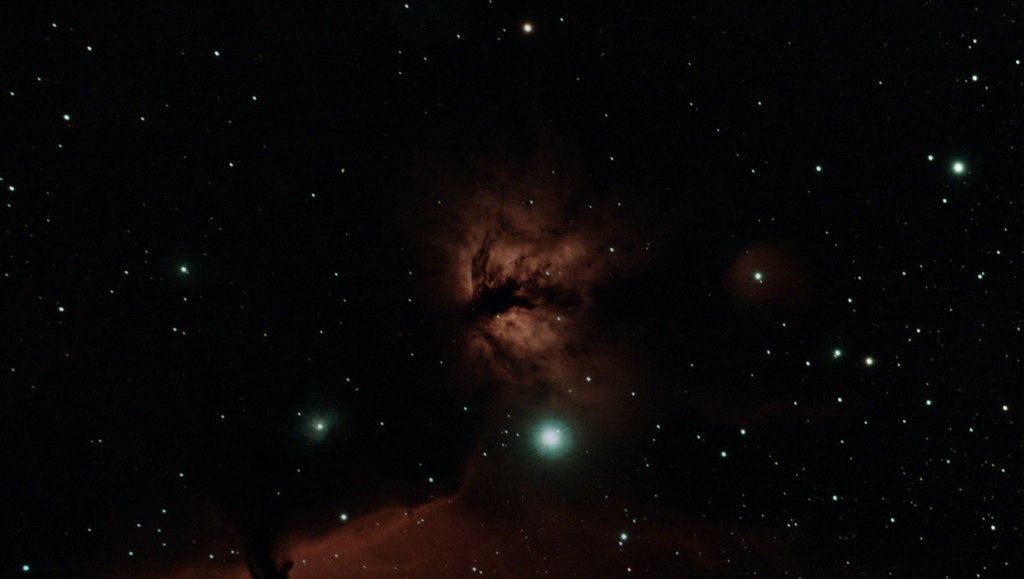
The flame Nebula is an emission nebula located approximately 900 light years away in the constellation of Orion. The nebula is made to luminesce by the nearby eastern most star in Orion’s belt.
ref: SkySafari 6 Pro
- NGC 2174 – Monkey Head Nebula
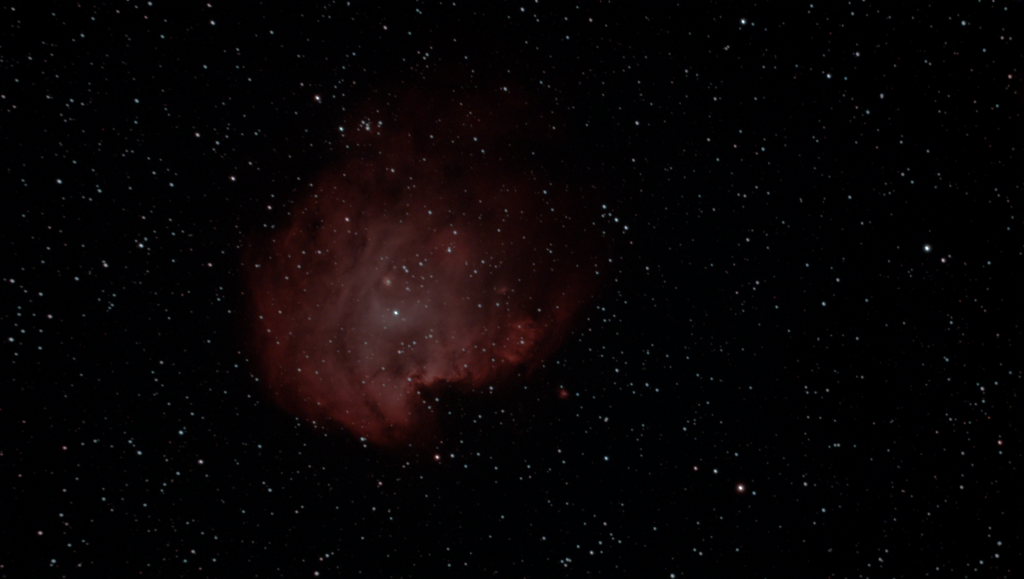
NGC 2174 is a 7th magnitude Bright Nebula appearing in the constellation Orion. Located approximately 1370 light years from our solar system.
NGC 2174 appears roughly 40*30 arcminutes in size, corresponding to a physical diameter of 16 light years.
reference: Skysafari 6 pro
- Sh2 185
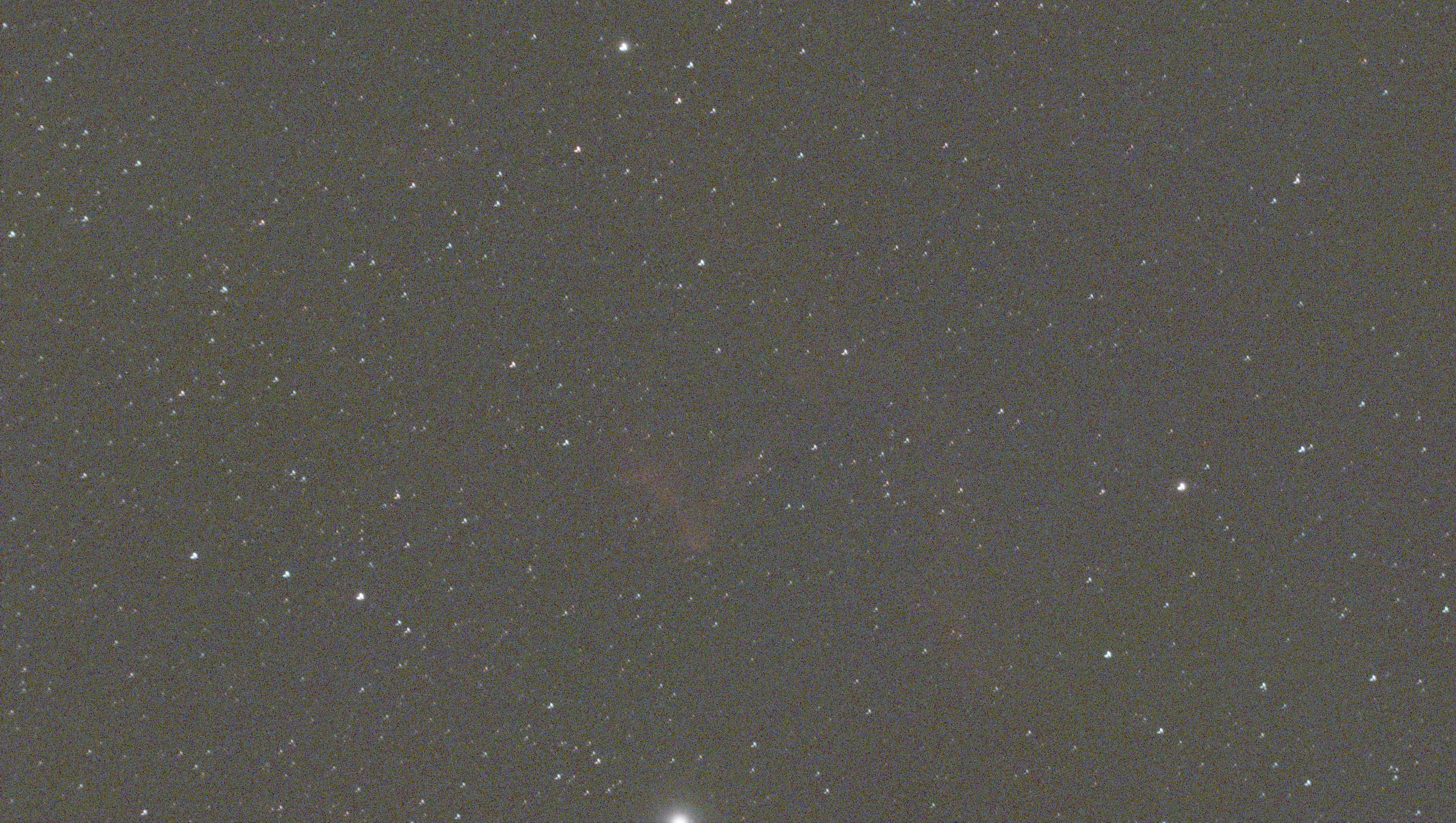
Sh2 185
Distance: 10,500 light years
Classification: Emission Nebula
- Sh2 155 – The Cave Nebula
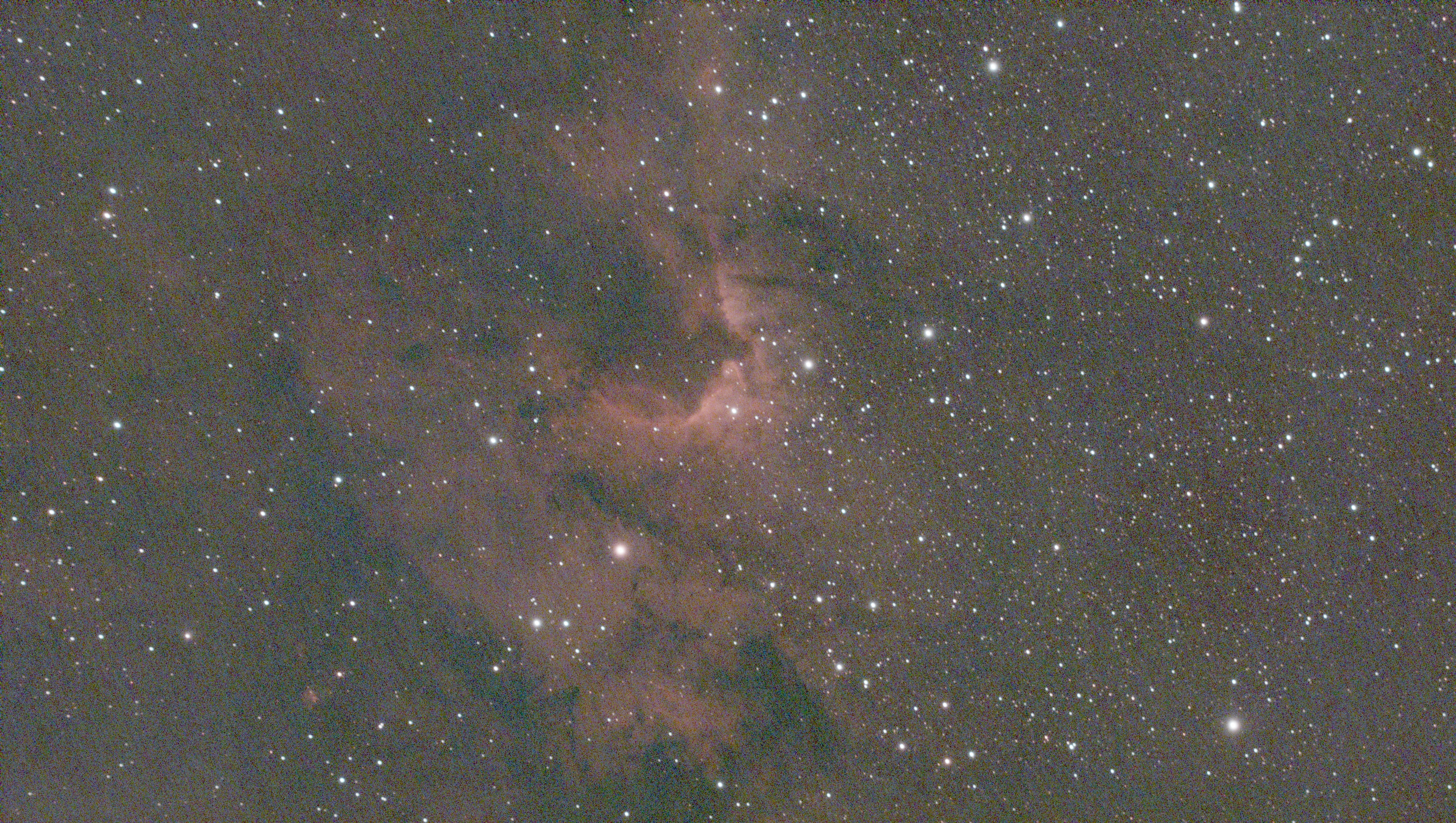
Sh2 155 – Cave Nebula
Distance: 2400 light years
Classification: Reflection, Emission and Dark Nebula
- NGC 6530
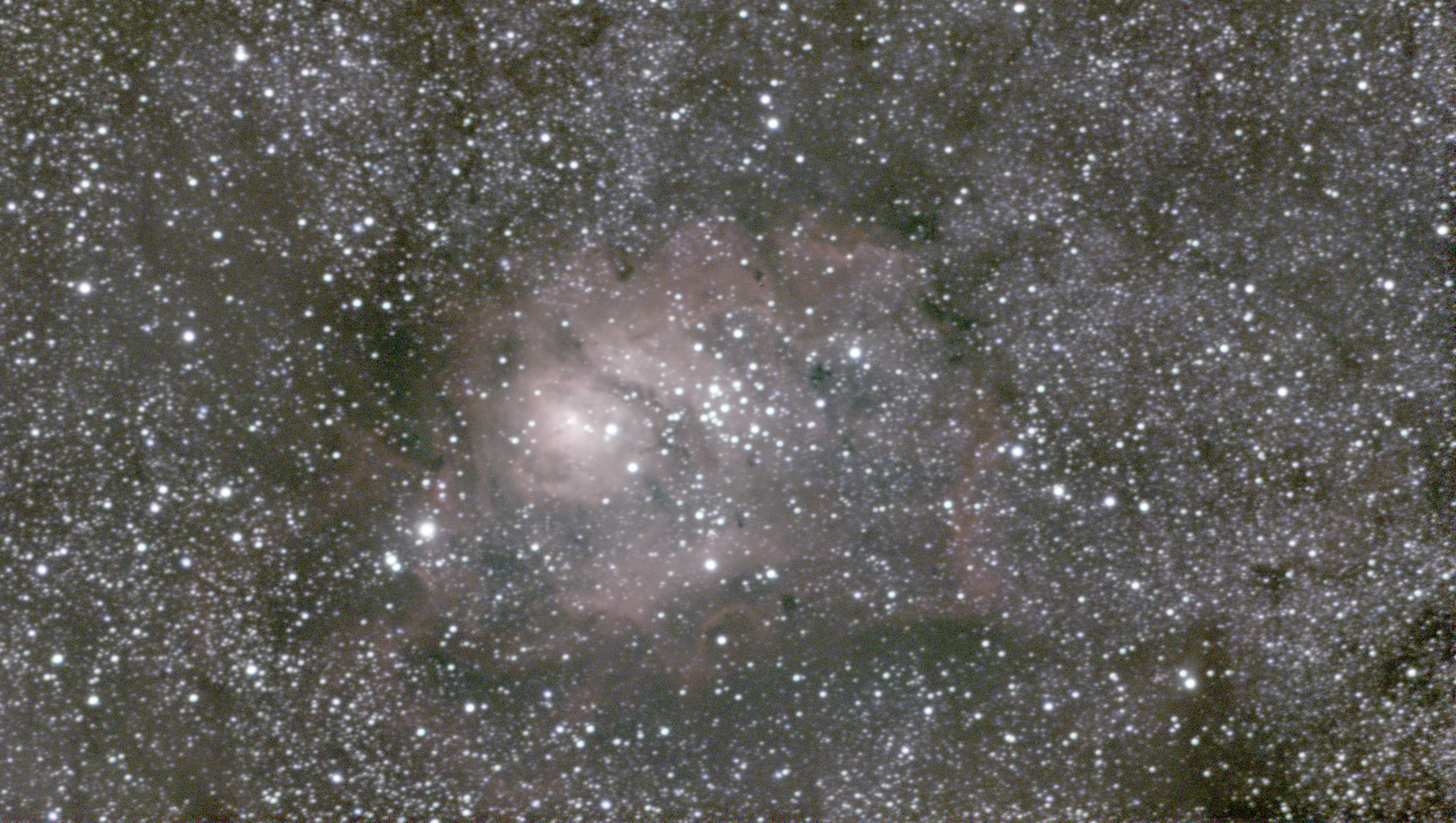
- Moon
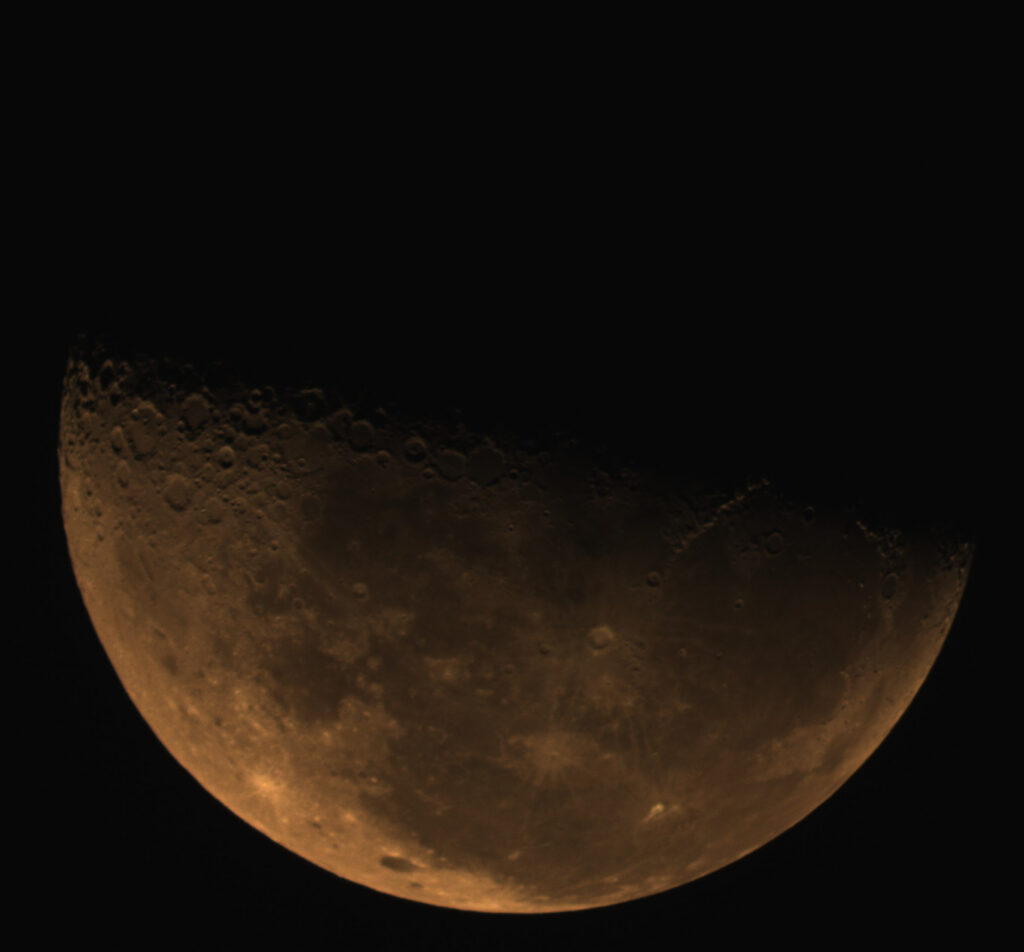
Moon
Distance: 384,399 kilometres (238,854 mi)
Classification: Natural Satellite
- IC 1805
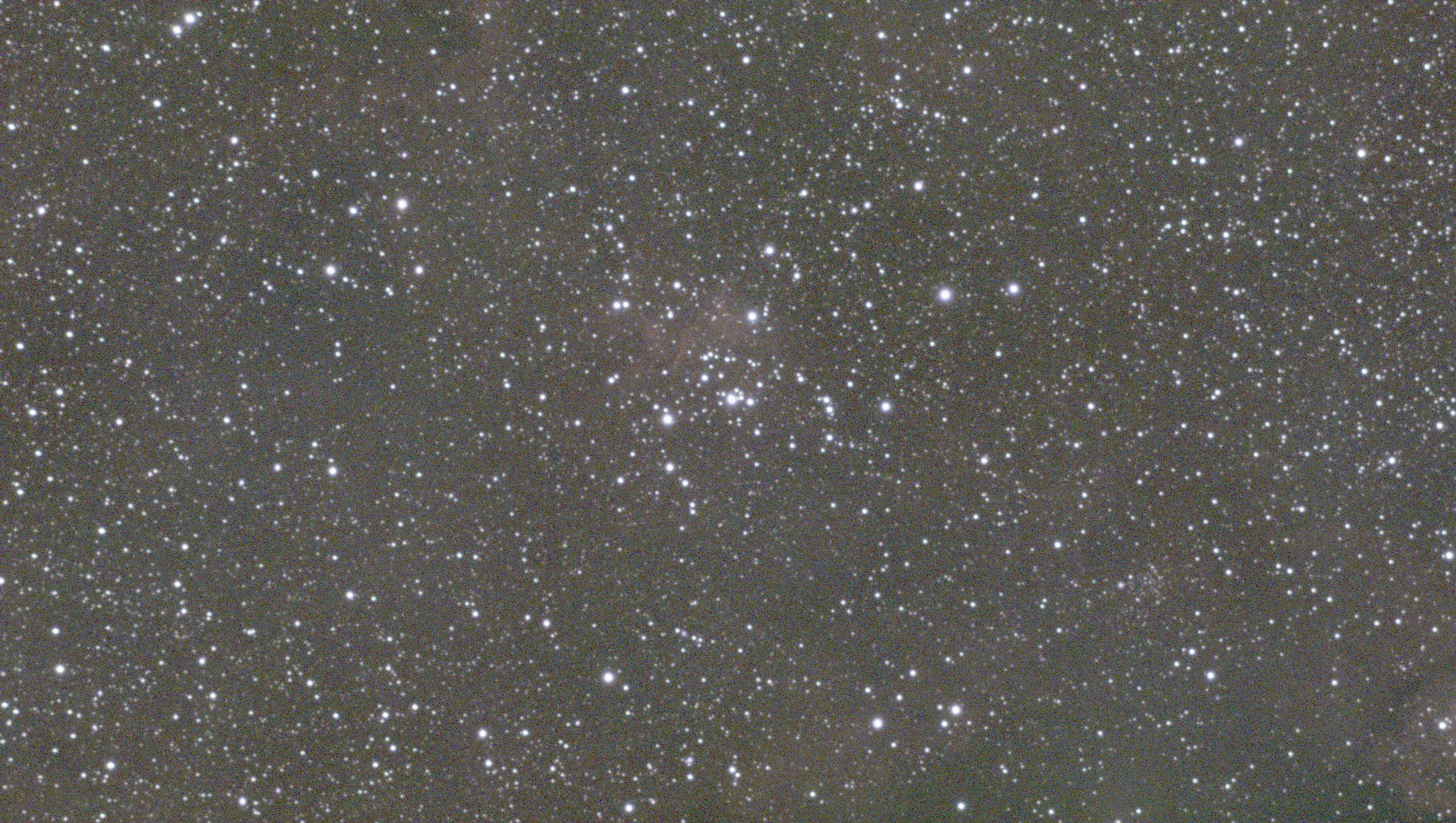
- IC 63 – The Ghost Nebula
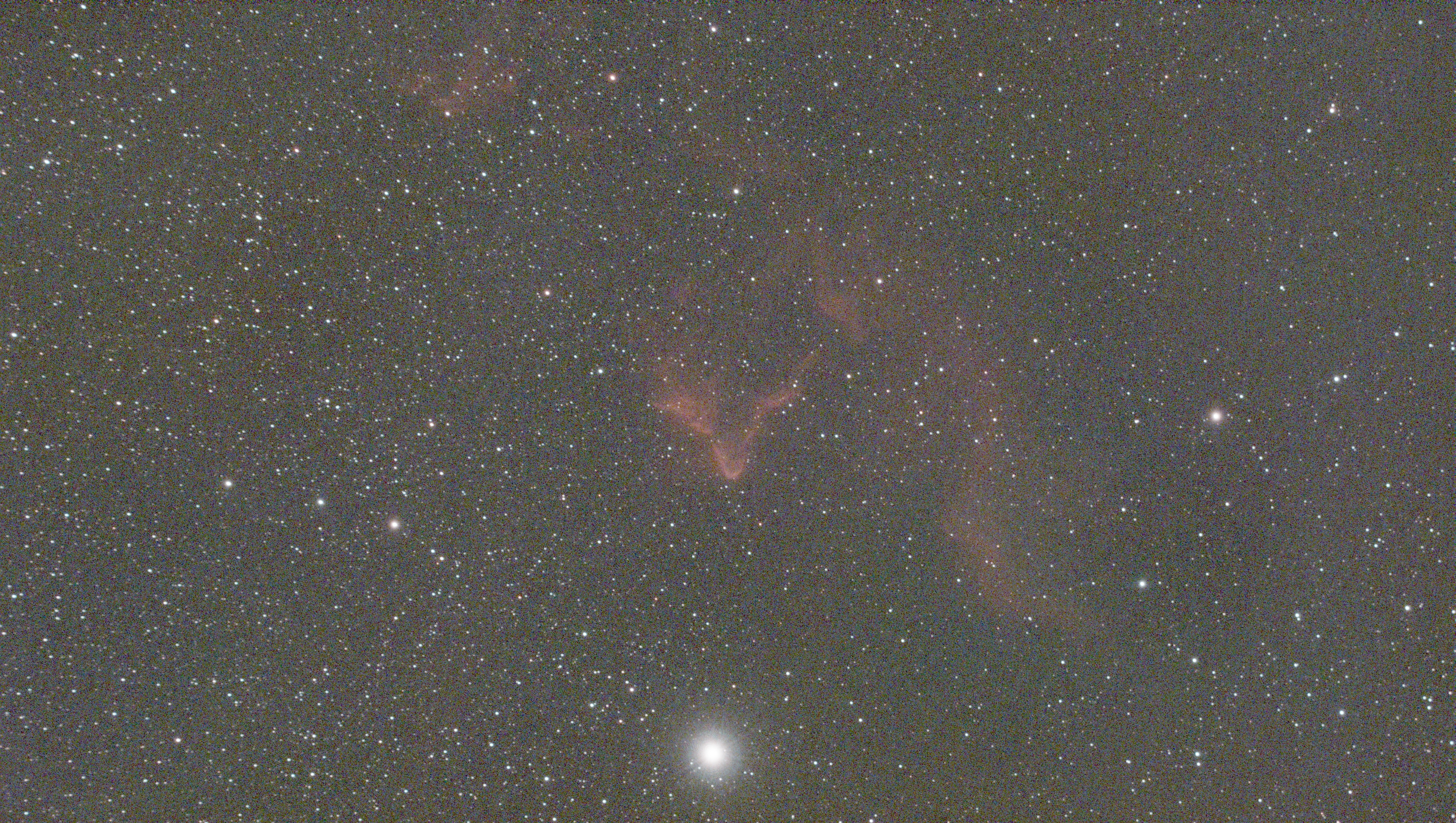
IC-63 The Ghost Nebula
Classification: Reflection / Emission Nebula
Distance: 550 light years
REF: https://commons.wikimedia.org/wiki/File:The_Ghost_Nebula_IC_63.jpg
ChatGPT
IC 63 (Ghost Nebula)
IC 63, nicknamed the Ghost Nebula, is a faint emission and reflection nebula in the constellation Cassiopeia, about 550 light-years away. It glows red from hydrogen gas ionized by the nearby star γ Cassiopeiae (Gamma Cas) and also reflects its blue light. IC 63 is part of a larger nebular complex (including IC 59) shaped by stellar winds and radiation.
IC 59
Located beside IC 63, IC 59 is another reflection/emission nebula influenced by γ Cassiopeiae. It is more diffuse, fainter, and dominated by reflection rather than emission, giving it a bluish hue. Together with IC 63, it forms a visually striking pair.
γ Cassiopeiae (Gamma Cas)
A bright, hot Be-type star in Cassiopeia, ~550 light-years away. It is about 19 times the Sun’s mass and rotates extremely fast, ejecting material into a surrounding disk. Its strong ultraviolet radiation ionizes nearby gas clouds, including IC 63 and IC 59. γ Cas is also a variable star with irregular brightness changes.
Cassiopeia Constellation
A prominent northern constellation, recognizable by its “W” shape. It lies in the rich star fields of the Milky Way and contains many notable deep-sky objects, including IC 59/63, the Heart and Soul Nebulae, and several open clusters. It is best viewed in northern autumn. - NGC 281
ChatGPT
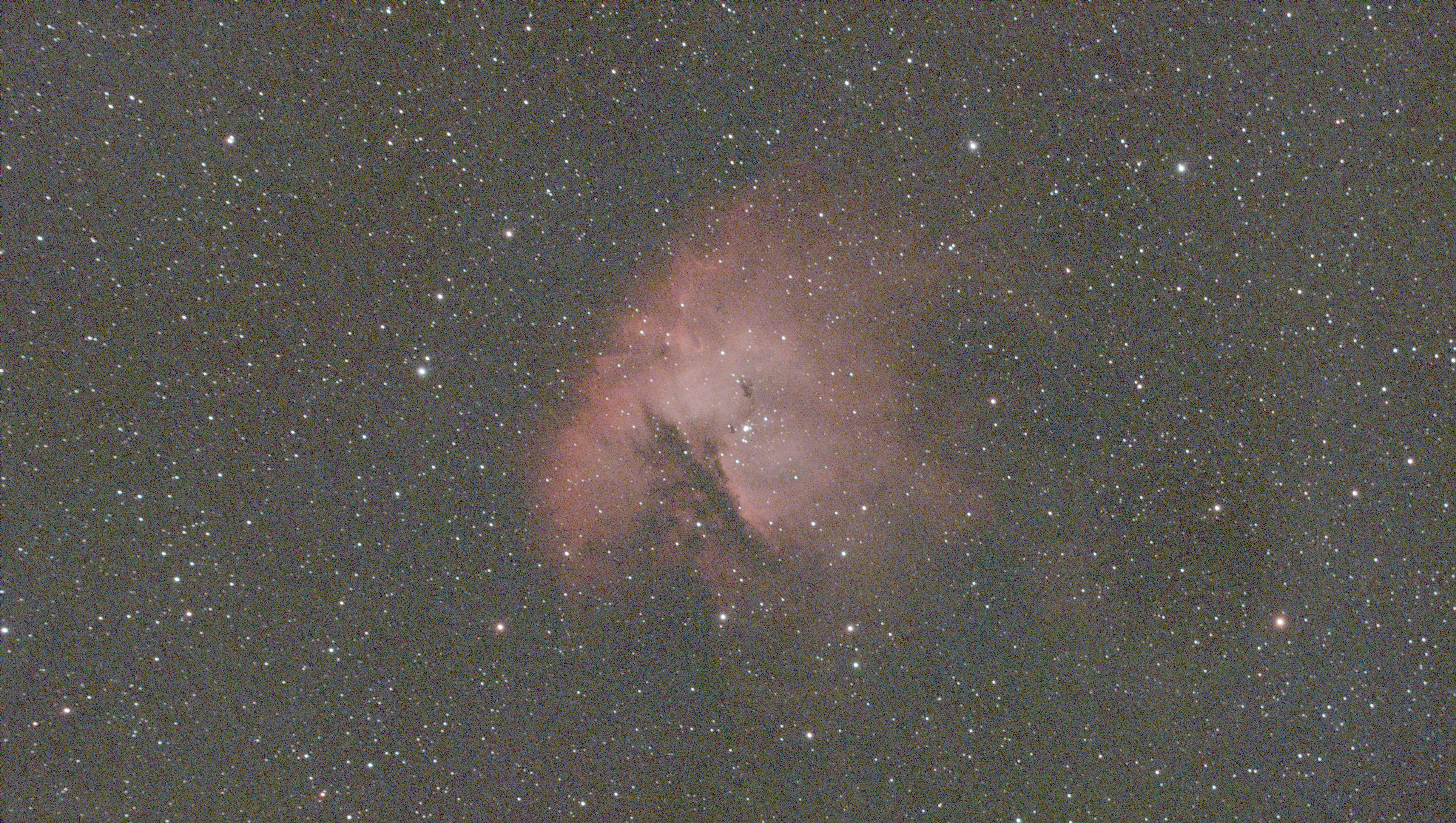
NGC 281 (Pacman Nebula)
NGC 281, nicknamed the Pacman Nebula, is an emission nebula located in the constellation Cassiopeia, about 9,200 light-years away. It is part of the Perseus Spiral Arm and spans roughly 48 light-years. The nebula glows due to ionization from nearby hot stars and contains dark dust lanes that give it its distinctive “Pacman” appearance. It is a rich star-forming region, hosting young stellar clusters, Bok globules, and active gas clouds.
—
IC 1590 (Open Cluster inside NGC 281)
At the heart of NGC 281 lies IC 1590, a young open star cluster. Its massive, luminous O-type and B-type stars emit strong ultraviolet radiation, which ionizes the surrounding hydrogen gas, powering the nebula’s glow. The cluster is only a few million years old and represents an active site of star formation. Stellar winds and radiation pressure from these stars sculpt the surrounding nebula, driving further star birth and carving intricate shapes in the gas and dust.
—
Bok Globules in NGC 281
NGC 281 is home to numerous Bok globules—dense, dark clouds of gas and dust. These compact regions are stellar nurseries where gravity may collapse material into protostars. Against the bright emission background, they appear as small, dark patches. Studies of these globules provide insights into the earliest stages of star formation, including how molecular clouds fragment and evolve. They are critical in shaping the nebula’s appearance, adding to its “Pacman” silhouette, and contribute to NGC 281’s role as a prime laboratory for stellar evolution.
